Written by: Jeric Yurkanin
What makes a great coach isn’t the win column, the trophies, or the highlight reels. Those moments are sweet, sure — but they’re not the legacy. What truly defines a coach is the impact you leave on the lives you touch. When an athlete hangs up the jersey years later… when an assistant coach steps into their own leadership role… when they walk out into the world carrying pieces of what you poured into them — that is success.
I learned that in my own eight-year journey running an adult slow-pitch softball team in the NEPA Church League. We won a league championship, made two more title runs, and reached the semifinals three other seasons — but the real victories weren’t on the field. They showed up during warmups, in the conversations no one else saw, in the confidence built inside players who didn’t believe in themselves at first, and in the assistant coaches who grew into leaders because someone finally recognized the fire they carried.

Back in 2016 and 2017, I dove into the minds of the greats — John Wooden, Nick Saban, Geno Auriemma — trying to understand what separated ordinary coaches from transformational ones. The truth hit me fast: not everyone is called to coach, because coaching isn’t just strategy. It’s heart. It’s culture-building. It’s being able to see strengths in people before they see them in themselves. It’s knowing how to develop them year after year, how to pull greatness out of them one conversation, one rep, one moment at a time. It’s knowing how to study an opponent’s strengths and weaknesses… and then inspiring your players to respond, to rise, to give everything they’ve got — until a positive team culture becomes the engine of success. And sometimes, if you’re lucky, you even win a championship along the way.
There’s no magic, no luck, no secret formula. You either have that touch — that ability to breathe life into athletes and assistants in a way that follows them long after the season ends — or you don’t. And that’s okay. Because winning isn’t about rings. It’s about the echoes you leave in someone’s life long after they walk off your field.
For me, those echoes came from my former high school coach — Lakeland’s longtime boys track and field coach, Phil Tochelli Sr. When I was in eighth grade, hearing about his success pushed me to start running at home, training for the one-mile fitness test every year. Then in 2001, my gym teacher, Dan Case, convinced me to join track for my senior year. That season, I ran cross country and track — and I shocked a lot of people. Some of my teammates’ parents, and even a few teammates themselves, were surprised at how well I performed in my first and only season. My best cross-country 3.1-mile time was 18:57, and my best 2-mile track time was 11:13.
But here’s the truth: Phil left a mark on every athlete who walked through that locker room — whether they started young or late like I did. He taught us how to work, how to win, and how to believe in what we could become. And he didn’t just talk it — he lived it. His career record says it all: 213–20 in 24 years, 21 conference titles, 18 Jordan Relays championships, 11 District 2 titles, and 42 state medalists.
Phil taught me to outwork everyone. He taught me discipline, grit, and persistence. He showed me what leadership looks like when it’s done right. And today, I am who I am — as a coach, as a leader, and as a man — because of him.
In my opinion, what makes a good coach is all of that — plus someone who, year after year, over a 10–20 year stretch, consistently leads their teams to winning records and keeps them in the hunt for division, league, district, state, national, or conference championships. It’s developing athletes who work hard, who rise to the moment, who play for you because they know you’re in their corner, pushing them to be their best. That, to me, is greatness. And truthfully? There are very few people I’ve ever met who have done that. It’s rare.
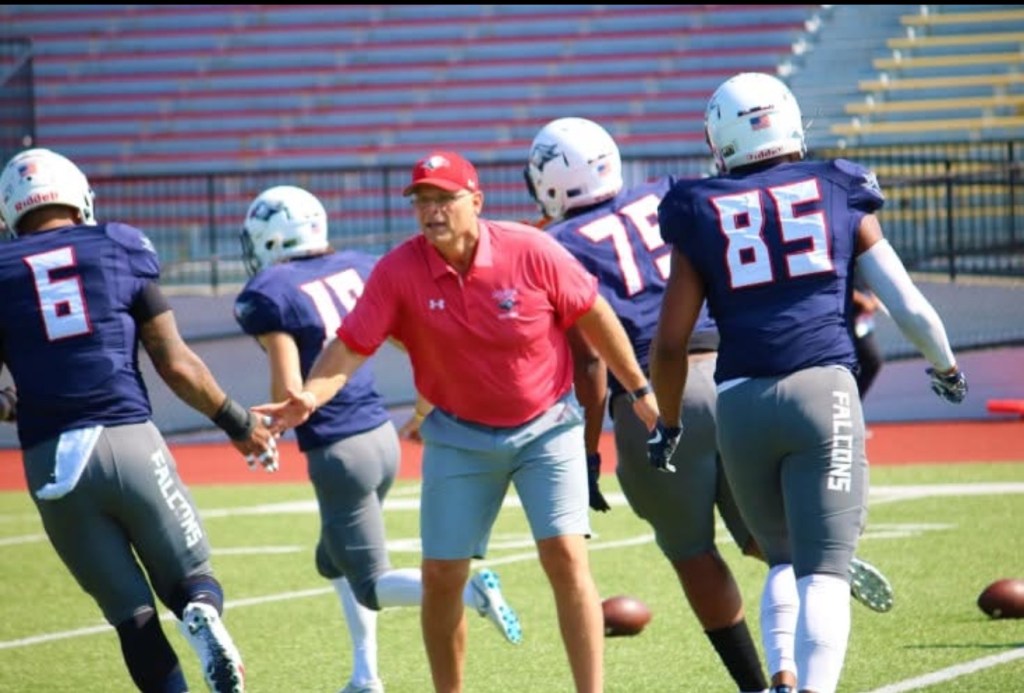
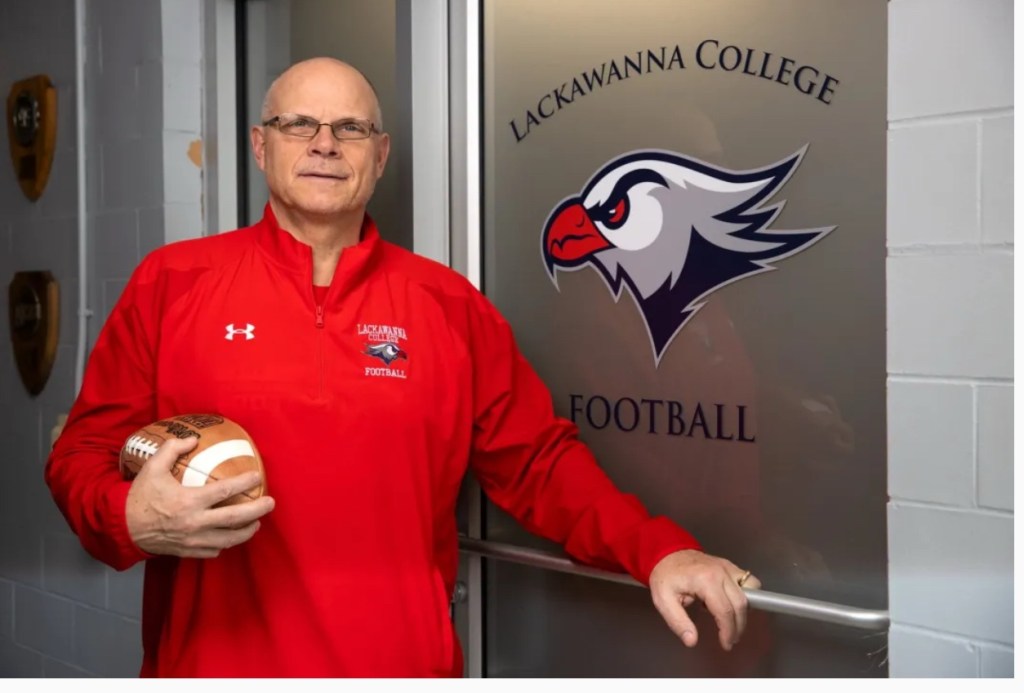
One of them is longtime Lackawanna College football coach, Mark Duda.
He joined the staff in 1993 as the defensive coordinator, and by 1994, he was named head coach — and the rest is history.
Before his time at Lackawanna, he was a standout athlete himself. At the University of Maryland, he set the single-season school record with 13 sacks — a mark that stood until 2015. After college, he was selected with the 96th overall pick in the 4th round of the 1983 NFL Draft. Duda went on to play five seasons in the NFL, starting 34 games, appearing in 55, and recording 9.5 sacks.
Throughout his coaching career, he impacted countless athletes — some who went on to four-year colleges, some who entered the workforce, and many who became leaders in their own communities.
One of them is former Lackawanna College wide receiver and Riverside standout Ron Pavalonis, who played for Duda from 2002–2003 and now coaches Riverside’s freshman football team. Ron shared the lessons he carries to this day:
“The first lesson he taught was that there are a thousand athletes just like you all over the country. What’s going to separate you? He was the type of coach who gave you an opportunity, but nothing was handed to you — everything was earned. He built a toughness — a mindset — that went beyond football. To be early is to be on time. The biggest thing he did was hold us accountable. But when we fell down, he was right there to pick us up.”

Another former player, Shane Schuback of Old Forge — who led the Blue Devils to a state championship appearance in 2013 — shared a similar story. When other schools didn’t give him a chance, Coach Duda did:
“Coach Duda gave me a shot right out of high school when Shippensburg didn’t work out. The first day he saw me, he told me I’d be a great fit. He showed what a true leader was — he never let us settle for being average.” Said Schuback.
Schuback continued , Coach Duda always said, ‘We are what we make our lives to be. Give as much effort in life as you would on 4th and goal.’ That stuck with me. Don’t give life a chance — grab it and take control.”
Today, Shane coaches alongside his father, longtime Old Forge head coach Mike Schuback, carrying those same values forward. He also shared a story that shows who Coach Duda was off the field:
“When I had a full-body cramp and ended up in the hospital, he brought me food — and paid my medical bill out of his own pocket. He even moved my car so it wouldn’t get towed. Coach Duda always had his players’ backs, no matter what.”
And now, after Lackawanna’s game on Saturday, November 15, Coach Duda will be hanging up his whistle for good. After much thought — and after facing the challenges of a Parkinson’s disease diagnosis — he has decided it’s time. It’s never easy for any coach to walk away from something you’ve lived your whole life around. But the impact he leaves behind stretches far beyond football.
Coach Duda retires as the active wins leader in the National Junior College Athletic Association, with 217 career victories. He has developed over 450 NCAA Division I athletes and helped produce more than 25 NFL players.
He has also made a lasting impact on one of his former assistant coaches, Daniel LaMagna, who coached under him from 2006–2009:
“I had a career- and life-building experience with Coach Duda. The lessons I learned from him — his standard, his preparation, his work ethic — are things I still carry with me today in leadership and in life. Nobody outworked us. Coach Duda was a critical thinker and a grinder whose attention to detail and genuine care for his athletes were second to none. He could have coached Division I or even in the NFL, but he chose to put his family and the LC student-athletes first. He made everyone around him better — players, students, coaches, and people.”
He continued: “Coach Duda was a critical thinker and a grinder. His attention to detail and his care for the athletes were second to none. Our motto during the years I assisted him was, ‘Nobody outworks us,’ and everyone believed that to their core.. We spent the week grinding — going over every detail, every tendency, every situation. But on game day, we rolled out the red carpet for the players. Everything was perfect for them. That formula worked, and the success we had carried on as Coach Duda continued to evolve the program year after year. I truly believe we outworked every opponent we faced, even though we didn’t always have the same amenities or resources. Coach was a tireless leader every single day he stepped on campus. He took ownership of every aspect of the program.”
Coach Duda cared about his players like his own children.
“How much Coach Duda really cared for his students, Lackawanna College and his family. Coach could have coached DI or in the NFL having had much success and many opportunities, but he put his own family and the LC student-athletes that he could have the greatest impact on first. I believe I can speak for all his former players and coaches that we are thankful for the impact he had on our lives through the sport we all love. He made everyone better players, students, coaches and people both on and off the field.” Said Dan LaMagna.
But Even in retirement, he won’t be far from the game he loves. Coach Duda will remain connected to Lackawanna College as an athletic advisor, continuing to shape lives — just as the greatest coaches always do.
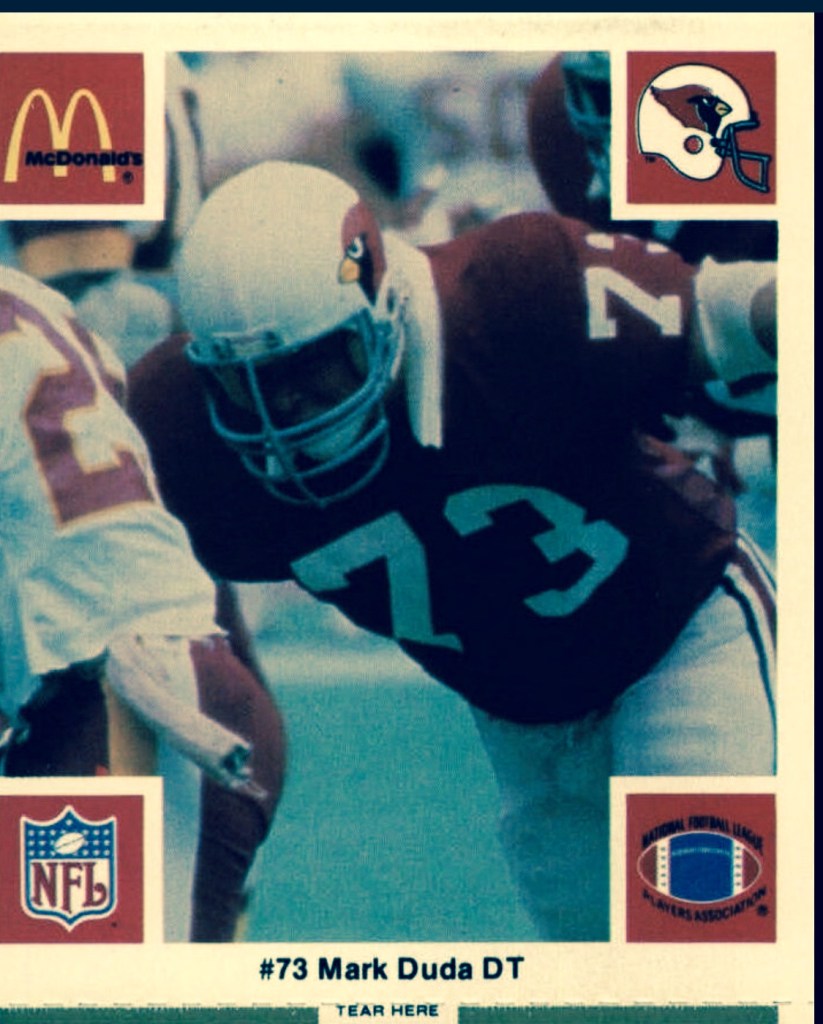
Mark Duda will go down as one of the greatest junior college football coaches to ever do it. And I can say without hesitation: Lackawanna College will not have another Mark Duda for a very, very long time. He is a rare gemstone — one of the greats.
——————————————————————
A huge thank you to our Fall 2025 sponsors for helping make our podcast and articles possible. Your support directly impacts our local athletes and their stories. Below:




 Agape Freedom Sports LLC
Leave a comment