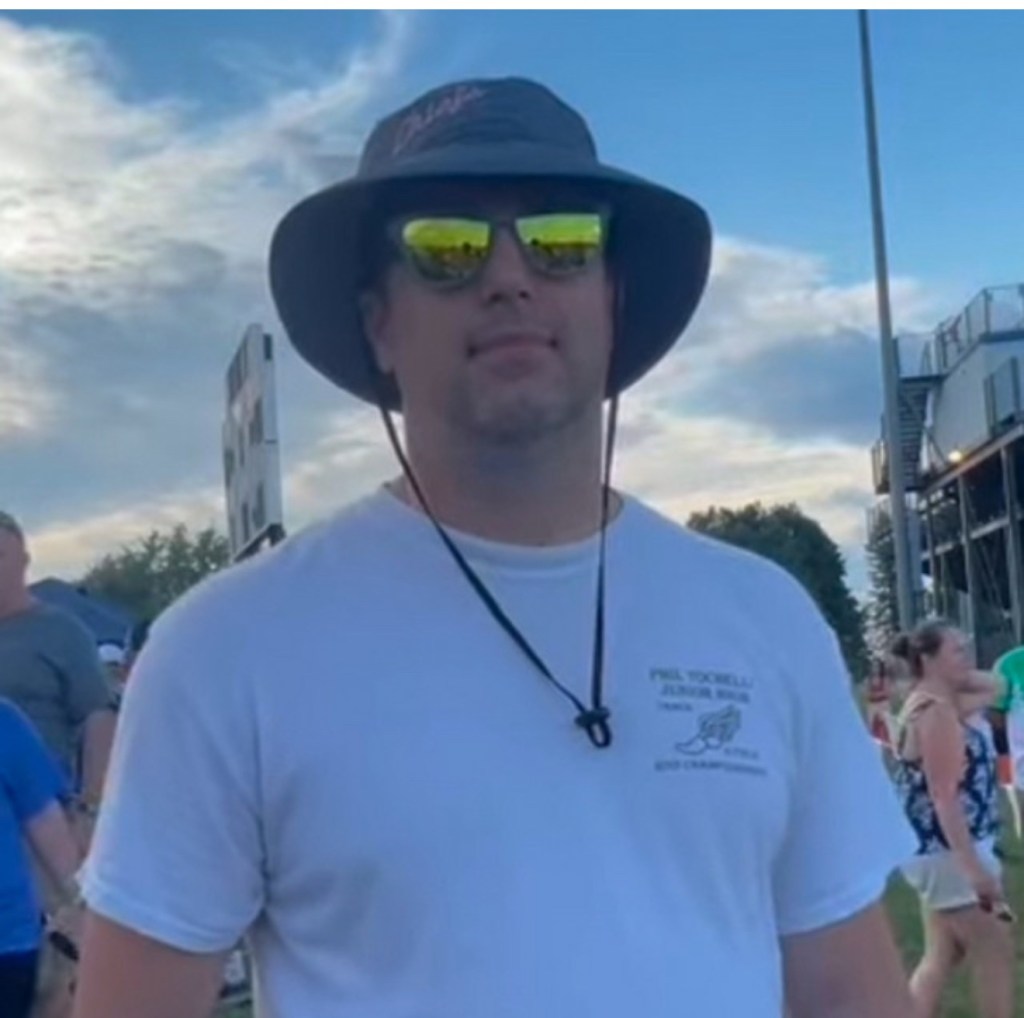
Written By: Jeric Yurkanin | Staff
When your last name is Tochelli in Lakeland athletics, expectations follow. For nearly three decades, legendary coach Phil Tochelli built one of the most respected track and cross country programs in Northeastern Pennsylvania. From 1979 to 2007, his track and field teams captured 21 Lackawanna Conference titles, 18 Jordan Relays, 11 District II Championships, and produced 42 state medalists — including two state champions. Some of those same athletes also competed in cross country each fall, carrying the Chiefs’ tradition across seasons. With a career record of 213–20 with the boys and 24–5 with the girls, along with seven Times-Tribune Coach of the Year awards, Tochelli earned a place in the Northeast Chapter of the Pennsylvania Sports Hall of Fame and recognition among the Times-Tribune’s Top 100 Sports Figures.
Stepping into that role after 28 years of dominance was no small task. But who better to carry the cross country torch than someone who had lived it, learned from it, and grown up in the middle of it all? In 2007, Phil’s son, Jason Tochelli, a former Lakeland runner himself, took the reins.

This story is presented with support from our sponsor — whose commitment helps celebrate the athletes, coaches, and traditions that make NEPA sports special.
Jason remembers the moment like it was yesterday:
“I was in Florida playing golf with my family when I got a call from the newspaper asking about taking over for him. It was definitely more challenging than I thought. He and his staff made it look easier. I had a lot more to learn than I expected.”
The lessons came naturally, though. He had been watching them since he was a kid.
“He was a very hard worker in everything he did—teaching, coaching, life. Team was always the focus. You improve every athlete, whether they’re the top guy or the last one in the race.”
That “team first” mentality became the heartbeat of Lakeland’s program, and Jason embraced it fully.

Memories on the Course.
Jason’s own career as a Lakeland runner shaped the perspective he brought to coaching.
“A few memories come to mind. When I was pretty young I remember being around a XC team that qualified for states. My brother was on the team and I was playing the role of little brother with them. They seemed to be having a great time at State College together. As a runner I remember pulling an upset in the 4×8 at districts and qualifying for states with the other guys on the relay. Had our best guy run second instead of anchor. Brilliant coaching move. He blew the race wide open.”
Those moments taught him how much decisions and culture could mean to a team.
A Tradition Passed Down.
Lakeland’s cross country tradition didn’t begin with Phil, but he elevated it into a powerhouse. By 1979, the Scranton Tribune was already noting the rise of Lakeland’s squads. Over time, Phil turned consistency into culture.
Jason continues that legacy today. He still uses many of his father’s workouts, occasionally brings Phil in to talk to the team, and emphasizes the same philosophy of unity.
“When athletes buy into the team, they learn the history from the older athletes and carry it on with them.”
That’s why names like Mark Arzie, Nathan Morgan, Emily Black—Lakeland’s first female state medalist—and current standout Henry Decker are part of a living lineage.
Building His Own Path.
Taking over in 2007 brought new challenges.
“In the fall of ’07 when I took over our numbers were low. The previous year the team was quite good but many graduated. I remember having to move up a few freshmen to help fill out the varsity team. I also remember having to wait a few weeks to win our first meets against Montrose and Blue Ridge. It was a longer wait than I would have hoped for but it was all a great learning experience. I knew I had to change some things I was doing in regards to practice and training. I also learned that the sash on the jersey that said Lakeland meant all the other teams were going to bring their best when they competed against us.”

As Jason developed as a coach, he also leaned into the wisdom of others.
“My father always encouraged me to talk to other coaches. I wish I did this more when I was a younger coach. There were so many good coaches finishing up their careers when I was getting started. One coach I enjoy talking to still is Coach Osburn, the former Forest City coach. He had some really tough-nosed teams throughout the years. He was always energetic and encouraging to not just his athletes but other teams as well. I think XC more than any other sport sees opposing coaches cheering on other teams’ athletes. It truly makes our sport unique.”
The Grind and the Growth.
High school running in District 2 has changed since Jason’s own competitive days. Cluster meets, expanded invitationals, and new training philosophies have shifted the landscape. One change, however, stands out to him:
“At the end of a meet, you’ll see 10–15 kids from different schools cooling down together, running and laughing after racing their hearts out. When I ran, that never happened. That’s sport at its best.”
Jason has also learned that coaching now means managing more than workouts and races.
“Kids anymore put a lot of pressure on themselves. Reminding them that these races are not the end all be all of their lives and that regardless of if they perform well or fall a little short, life will go on and things will be just fine. I guess it’s a perspective thing.
“It is not easy to keep their heads into it for the entire season. Trying to keep practice easygoing at some points is important. We also break our training into three phases. Setting a season-ending goal while understanding that the only thing you can do is what’s in front of you that day is definitely important.”
Family, Balance, and Perspective.
Coaching was easier when Jason was young and single. Now, with kids of his own, balancing family life and the grind of cross country is a challenge. But when his children show up in Lakeland XC gear on the sidelines, he smiles:
“Reminds me of when I was their age.”
Maybe one day they’ll run with that Chief logo on their chest, knowing exactly what it means.

Through it all, Jason remains grounded in humility:
“Winning is nice. But it’s more important to be a good person and to respect the sport and your competition. You don’t need to brag about how good you are or how many meets you won. It’s about the athletes—not the coach’s individual success.”
Pride in the Program.
Ask Jason about his proudest moment, and he doesn’t point to banners or trophies. Instead, he points to the culture.
“Seeing kids come together, work hard, and become a tight-knit team who actually enjoy their time together—that’s what makes it worth it.”
And as for how he wants to be remembered? His answer sounds a lot like his father’s:
“If people look back and say the program was healthy and had teams that worked hard, that’s enough for me. It’s always about the team—not me.”
Father like son. And the Tochelli legacy continues.
 Agape Freedom Sports LLC
Leave a comment